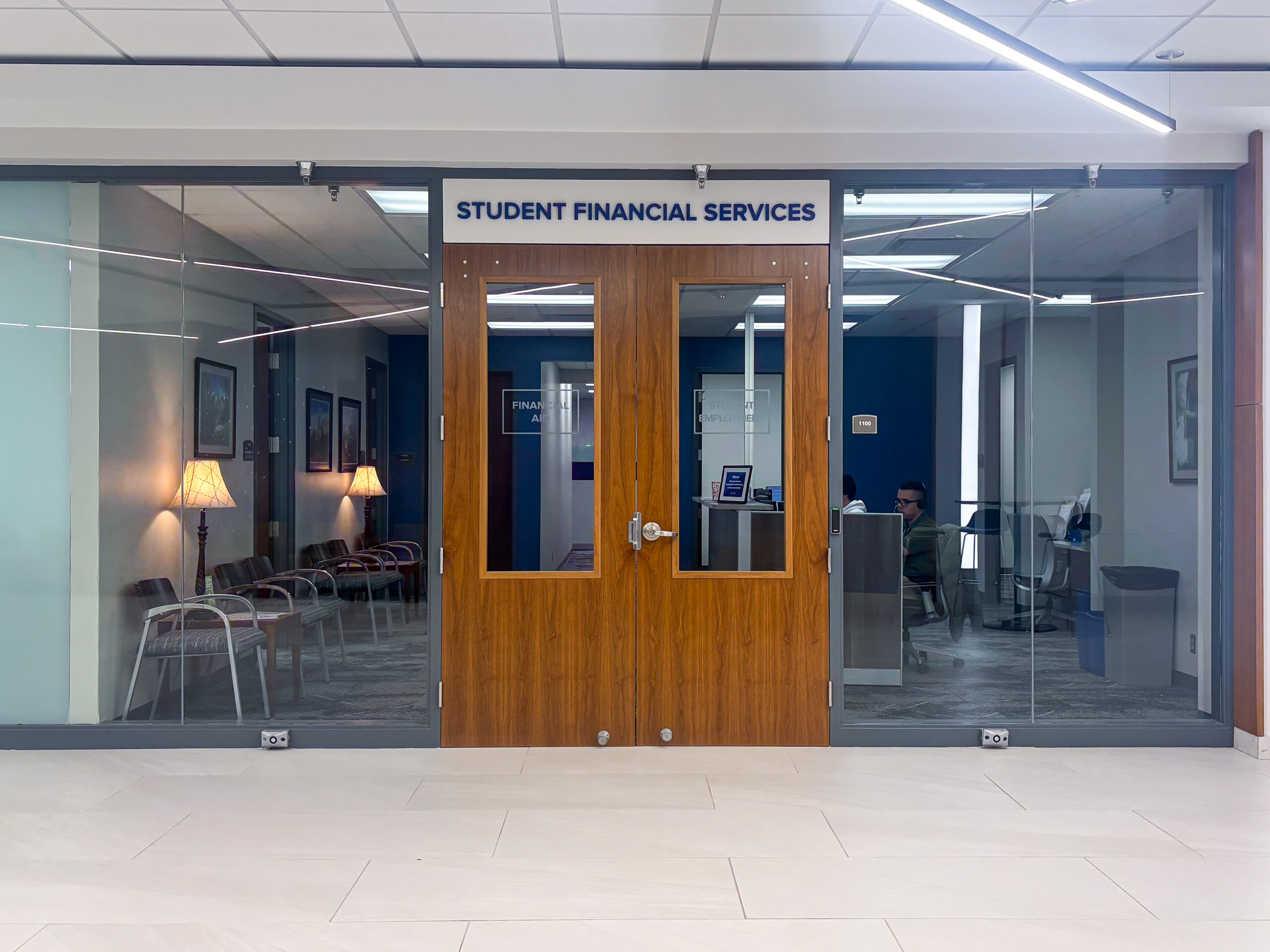
The Office of Financial Aid on the first floor of the Harper Center informs students about new federal Parent PLUS loan caps beginning in the 2026–27 academic year and works with families to understand how the changes may affect college affordability and financing options.
Changes to federal student loan programs under the One Big Beautiful Bill will place new limits on Parent PLUS loans, potentially affecting how families finance higher education beginning in the 2026–27 academic year.
Creighton’s Office of Financial Aid notified students of the changes in a letter sent Jan. 30, outlining new federal limits on Parent PLUS loans and explaining which students may qualify under a legacy provision.
Parent PLUS loans currently allow parents of dependent undergraduate students to borrow up to the full cost of attendance. Under the new policy, Parent PLUS borrowing will be capped starting July 1, 2026, unless students meet specific eligibility requirements under the legacy provision.
According to the letter, students who received a federal subsidized or unsubsidized loan that disbursed before July 1, 2026, will remain eligible for Parent PLUS borrowing without changes to annual limits for up to three additional years or until their academic program ends, provided they remain continuously enrolled.
“For your awareness, beginning July 1, 2026, students who do not fall under the legacy provision will experience new federal limits to Parent PLUS loans: Parent PLUS loans will be capped at $20,000 per student per academic year. A $65,000 lifetime limit will apply per dependent student,” Creighton Student Financial Aid said in a letter.
The changes have raised concerns among students about college affordability and access.
“I think it’s very sinister that the cost of college is going up at the same time that the ability to get loans is going down so much not just for undergrad, but also for professional schools,” Madeleine Dore, a sophomore in the College of Arts and Sciences, said. “The cost of college is not something that you can pay for with just a summer job anymore.”
Dore said she worries the changes could further restrict who is able to pursue higher education.
“I worry it will create a further divide in terms of who can access education,” Dore said. “There’s a misconception that students are just unwilling to work jobs, but the reality is that what students can realistically earn while in school doesn’t come close to covering the cost of college.”
Dore also criticized broader rhetoric surrounding access to education.
“I think it’s really interesting that a lot of the conservative talking points tend to be so focused on the idea of pulling yourself up by your bootstraps and bettering yourself, but that they are consistently taking away opportunities to do so through education by hobbling loans.”
Dore added that limiting borrowing options does not address rising tuition costs.
“The cost of college cannot be covered by the amount that you make as a student,” she said.
In the Jan. 30 letter, Creighton’s Office of Financial Aid encouraged students and families to review how the changes may apply to their individual financial situations.
“Our Student Financial Services team is available to discuss how these new limits may apply to your individual situation and to help explore alternative financing options if needed,” Creighton Student Financial Aid said in a letter.
Students with questions about Parent PLUS eligibility or future borrowing limits are encouraged to contact their assigned financial aid counselor.