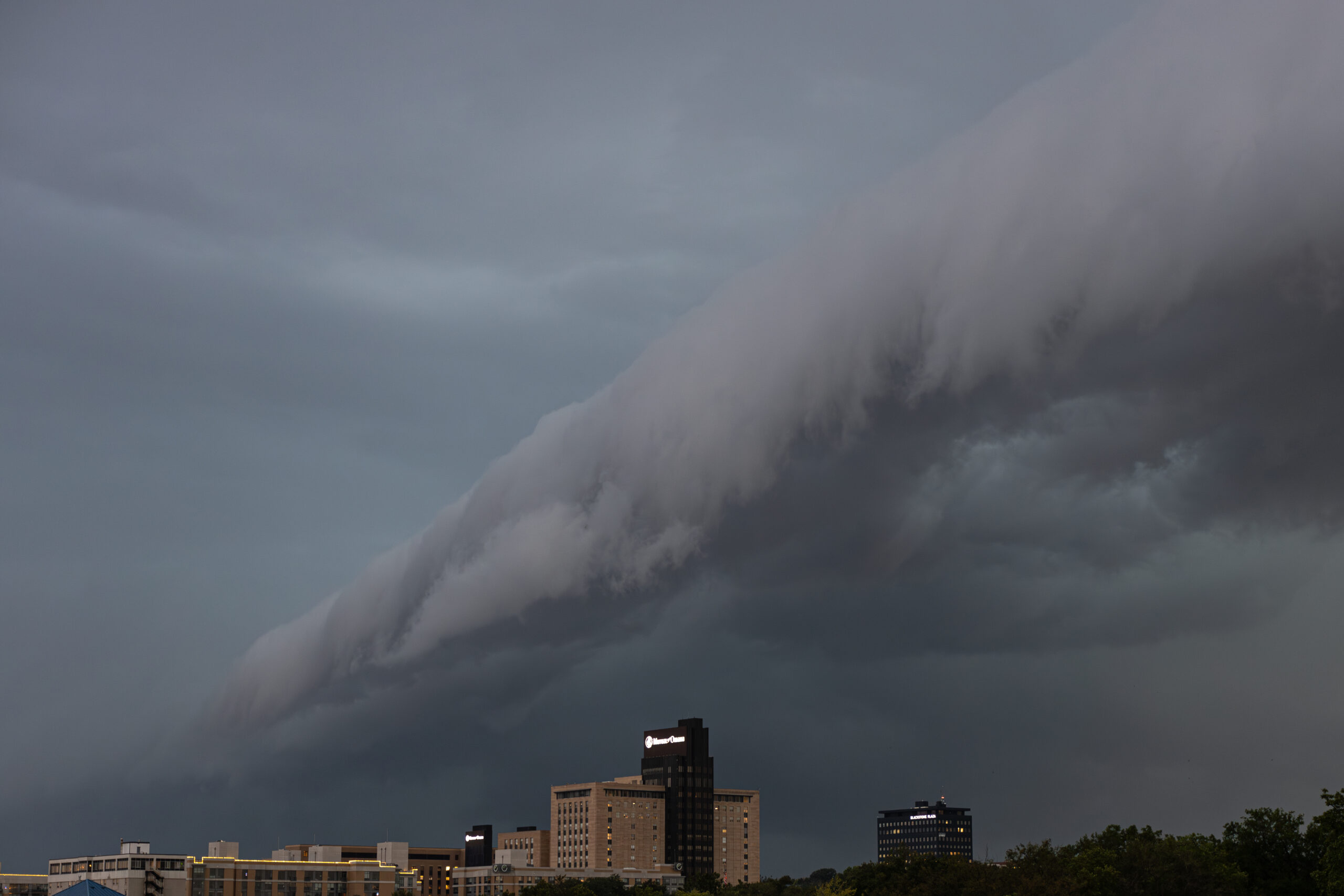
This week’s severe storms have not only brought with them torrential downpours but also a stark reminder that the severe weather season was not carried away with the heat of summer.
According to First Alert 6, this September marks record-breaking hot temperatures in Omaha. This could serve as a spawning ground for future storms. As the chance of storms persists, the Creighton community needs to remain ready to navigate anything that may come its way. Part of that readiness is knowing what to do in a few of the common conditions one may encounter during a severe storm, particularly those common in the Omaha metro: tornados and flash flooding.
In the unlikely event of a tornado or high winds, when sirens go off, they should be heeded immediately. The National Weather Service in Omaha now has a localized siren system, so if they can be heard, they are meant for that area.
To seek shelter, students should move away from windows to an interior room of the building they are in, preferably on a lower level to avoid injury if the integrity of the roof is lost due to high winds. If sirens sound while driving, take care to find the nearest solid structure to take shelter in.
Do not pull your car under an overpass. Overpasses create a wind tunnel effect that can accelerate debris up to bullet speeds, increasing one’s risk of injury or death. If sheltering outdoors is unavoidable, seek out a ditch to lie low in and protect your head until the tornado or high winds pass.
Heavy rains that accompany severe storms can bring flash flooding, especially in low-lying areas. If flash flooding begins to occur around an interior or exterior location, immediately get to higher ground in the area.
In flash flooding situations, roads face a severe risk of flash flooding in a matter of minutes. Should one be driving and come across a road that is blocked by rising water, they should not attempt to ford the water. 12 inches of water can sweep civilian vehicles away or quickly flood the engine, causing it to hydro-lock and leaving the driver stranded amongst the floodwaters, requiring them to wait for rescue as waters rise around them.
This situation is avoidable by not attempting to cross flooded roads. Turn around, don’t drown. Hail is a less common risk of severe weather, but a risk all the same. If hail becomes large enough before striking the ground, it can pose a risk to those stuck outdoors, and cover should be found immediately. Additionally, turn your face and body away from windows in case large hail causes them to shatter.
Creighton Universities website states, “If severe weather creates hazardous driving conditions, a CreightonAlert will be issued. Rather than announce a campus closure, the alert will direct faculty, staff and students to follow the guidance of their supervisor, faculty member or school administration. Make safety your priority and do not take unnecessary risks. Watch local television channels, check the University website or call 402-280-5800 for further information.”
Safety during severe storms is largely dependent on the actions of the individual, so as the extended severe weather season draws to a close, stay educated and stay safe, Bluejays.