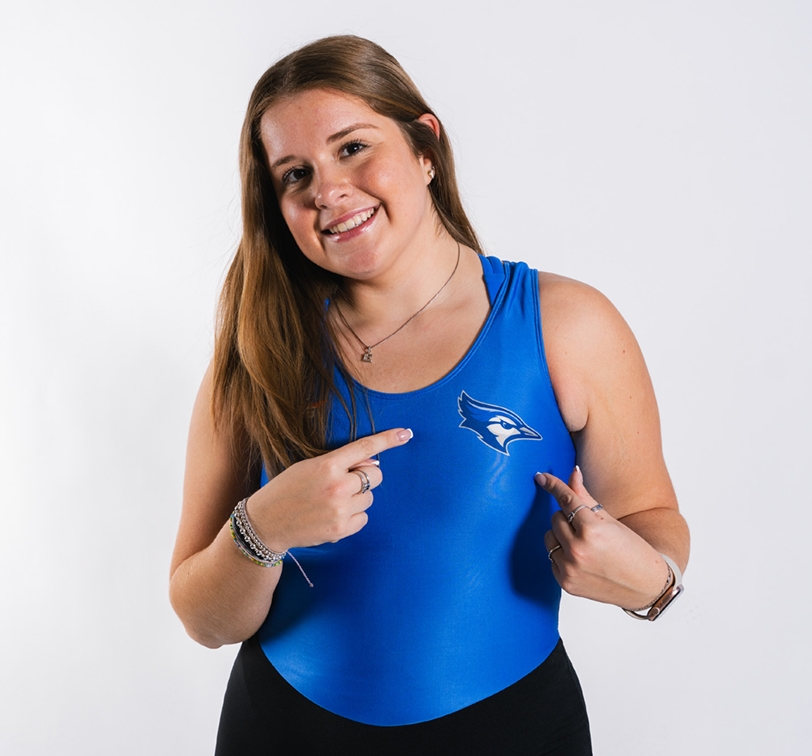
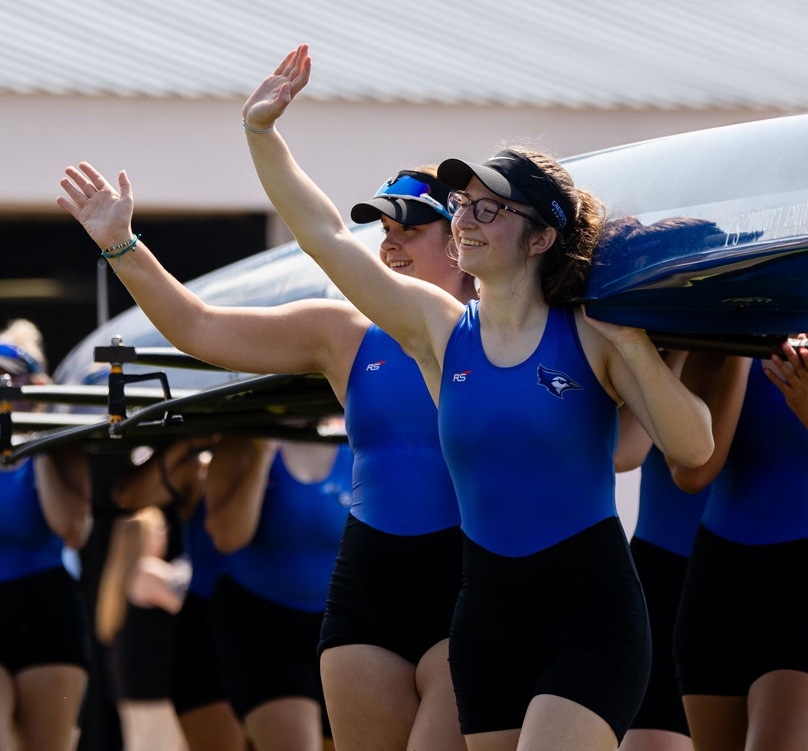
PHOTOS COURTESY OF EMMA CHIPPS
Collegiate rowing is a sport that requires intense amounts of mental fortitude and physical toughness. For senior Emma Chipps, this has held true for her entire college career.
A senior from Hartford, Conneticut, Chipps got her start rowing during COVID, practicing with her high school team.
“I actually started rowing on ERGS, the rowing machine, in my basement over Zoom with my high school coaches correcting my form for all of winter. Then, I got on the water spring of 2021 and have been hooked ever since,” Chipps said.
During the recruiting process for collegiate rowing, Chipps toured several schools and talked with several coaches. What drew her in were Creighton’s Jesuit values and education, but what sealed the deal was the support the teammates gave each other. During her visit, the team was participating in a 2K test, one of the hardest aspects of rowing.
“To see them all push through it and then get off the ERG and literally be out of breath, but cheering on the girl next to them, it just felt like the right place to be,” Chipps said.
The team dynamic changes every year as rowers graduate, but the goal always remains the same.
“We’re up at 5:30 in the morning in the pitch-dark, warming up and getting hands on the boat every day together. We’re really bonded, and the love and support we have for each other is really positive and impactful,” she said.
Having only eight weeks offseason, the team is always finding new ways to bond and learning how to work well with each other.
In January 2025, Chipps started to experience shoulder pain. Three days into practice, her hand went numb. She spoke to her teammates and athletic trainer to try to figure out what was going on.
“I think just at that moment I was like, ‘Ok. I need to get feeling back in my hand … so I can get back in the boat as soon as possible,’” she said.
Unfortunately, there has yet to be a definitive answer. During junior year, Chipps visited a series of orthopedic doctors who could not figure out the cause. This fall, she began to see internal medicine doctors instead, who suspect a nerve injury.
“Not being able to compete has been the hardest thing for me, especially because it hasn’t been on my terms, but it’s been so drawn out,” she said.
Chipps has also struggled to keep her identity as an athlete, since the injury has caused her to lose so much time of her collegiate career.
“No matter how hard I pushed, a nerve injury isn’t something I can push through,” she said. “It has forced me to stop and take a break, which is the very opposite of my sport.”
Through all this she has learned to lean on her roommates, family, athletic trainer and her coaches.
After many doctors’ appointments, Chipps learned an important lesson: how to advocate for herself. She said that it was “something she will take into post-grad and her career.”
Even though Chipps is no longer in the boat, her teammates still value her expertise and advice, voting to make her a captain for her senior season. She uses this role to help coaches by teaching technique to the novices, filming practices and filling in wherever she can assist.
“I love showing up with a positive attitude and a smile on my face every morning before, during, and after practice,” she said. “Being a listening ear and a shoulder for girls to lean on when they have a bad practice and being the loudest person in the room.”
On days when practice gets hard, Chipps brings her sense of humor, joking that her teammates are wearing three pairs of pants or that the faster you row, the quicker you’re done.
“You can get through the hardest things that [are] in front of you. There’s always another side of it. Your mental game has to be as tough as your physical game,” she said.
Chipps’s proudest moment on the water came during her sophomore year when the Varsity Eight beat Kansas State for the first time in program history. She was not in this boat, but remembers the emotions felt.
“The screams that were heard that day …,” she said, “we all lost our voices because we were yelling so hard for them to cross the finish line.”
Reflecting on her last season, Chipps says she wants her teammates to remember that the team is a family and community that will live on for years after she has graduated.
Planning to stay in Omaha after graduation, Chipps is applying to graduate school for her master’s in social work. With these changes, she still plans to continue with rowing, in some capacity.
Her advice for her teammates and anyone in her position is simple, “it’s okay to not be okay, and asking for help or advocating for yourself [are] incredibly important.”