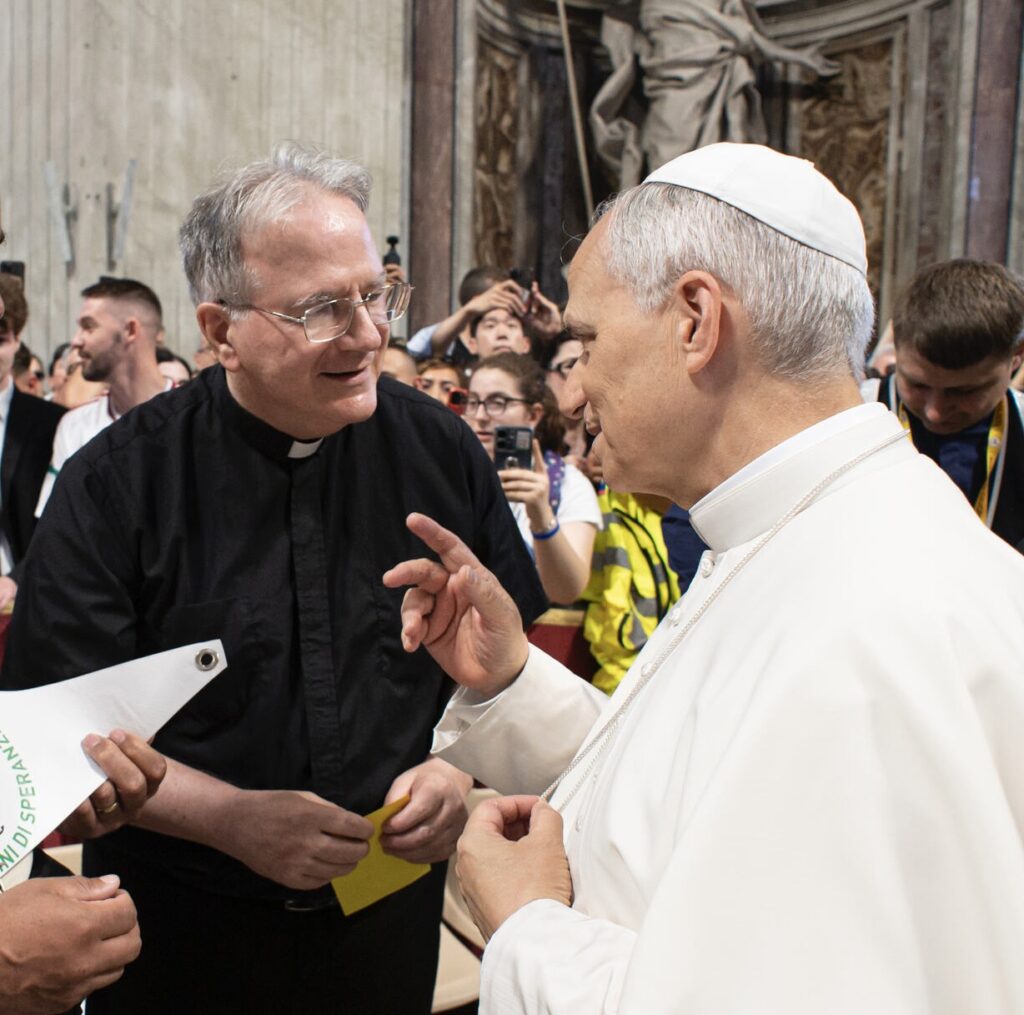
On Bluejay gamedays, the Jesuit residence tucked behind Creighton Hall sits quiet compared to the roar inside CHI Arena a few blocks east. Yet the Rev. Patrick Kelly, S.J., carries the sounds and questions of sport with him into his work as a theologian. His research asks why games matter and explores how play affirms human dignity.
Kelly joined Creighton this academic year as the Charles and Mary Heider Endowed Jesuit Faculty Chair. His position centers on research and writing, along with conference talks and teaching one class each semester. After years focused largely on teaching, he said he is glad to return to sustained writing and scholarship.
His interest in sport began long before academic life. Kelly grew up in Redford Township outside Detroit, playing sports on Catholic grade school teams. At Bishop Borgess High School, then the largest parochial school in Michigan, he competed in the Detroit Catholic High School League, one of the state’s top high school conferences. He participated in track but spent most of his energy on football and basketball. As a running back, he earned all-Catholic honors as a junior and served as a team captain.
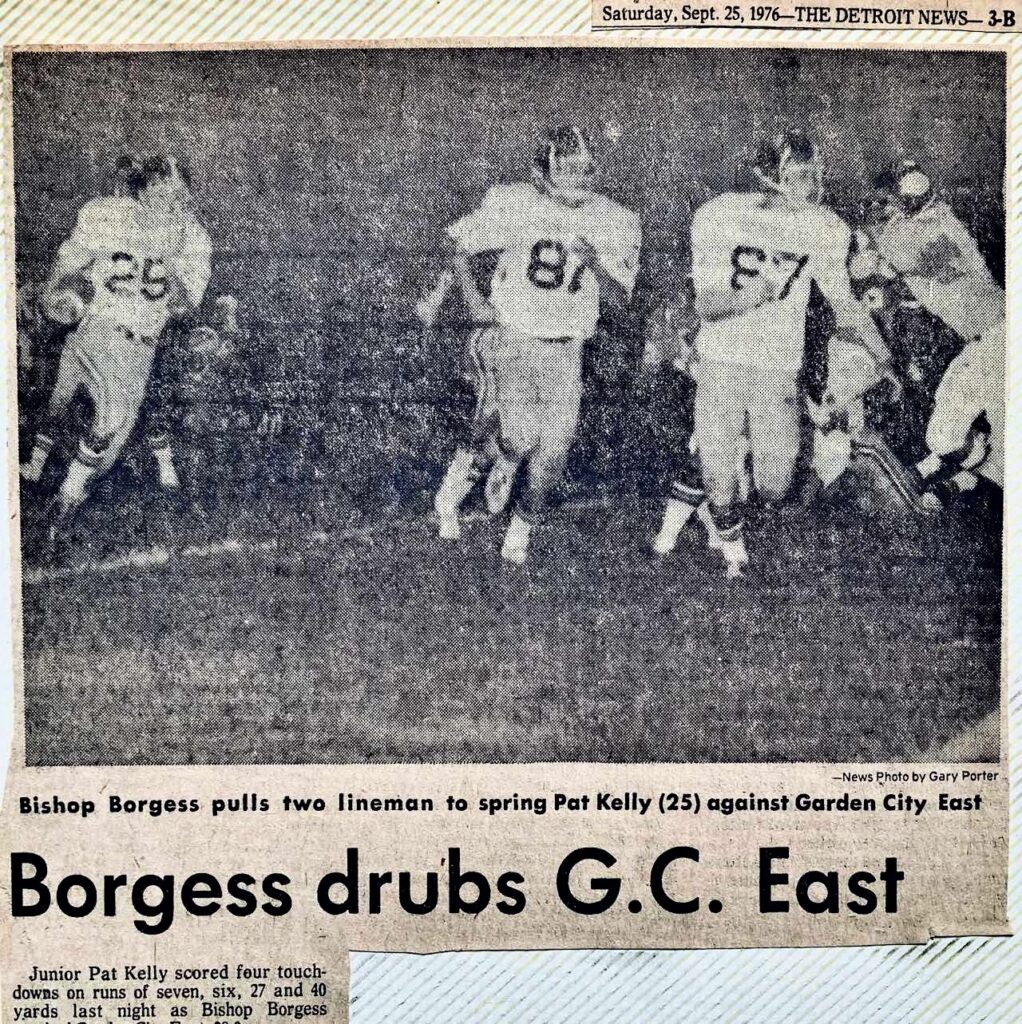
A few days into his senior season, Kelly broke his ankle during practice.
“I didn’t even play a down my senior year, and we ended up having one of the best teams in the state,” he said. “These were all my friends I’d played with since freshman year. That was the big year.”
The injury kept him off the field, but the experience stayed with him. Later, when he learned the story of St. Ignatius of Loyola, who was sidelined by a cannonball wound, he felt an unexpected connection. Both moments involved sudden loss, recovery and time to reflect.
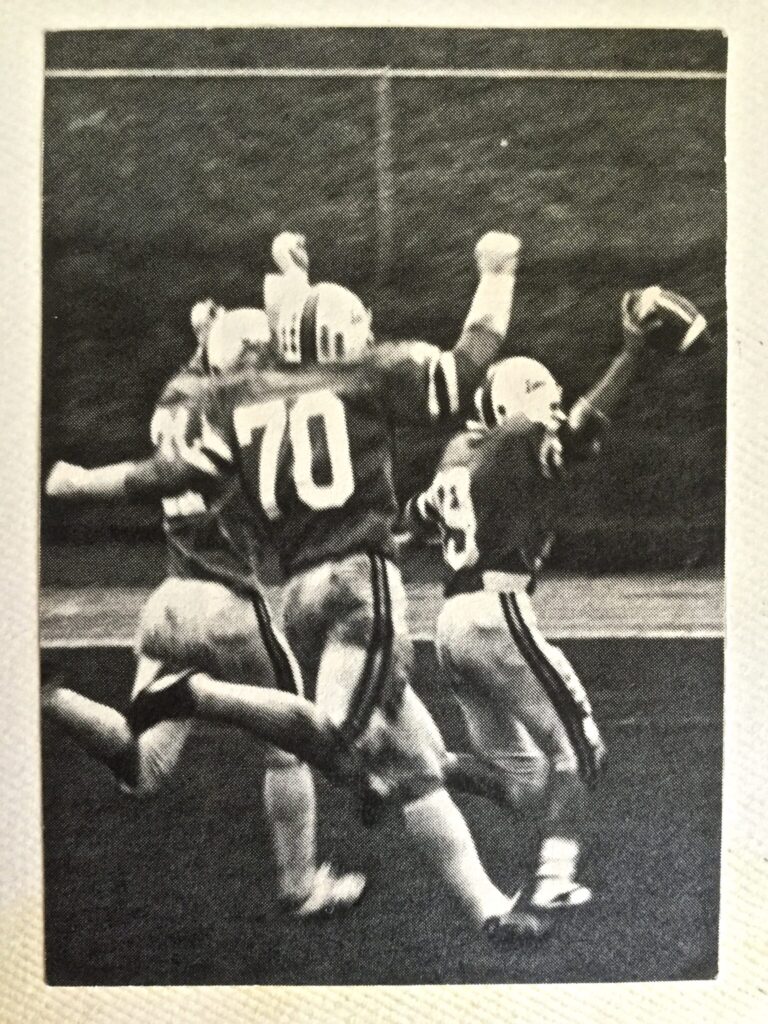
Kelly went on to play Division II football at Grand Valley State University in Michigan. He moved to free safety and returned punts, becoming one of the top punt returners in the country.
“Even at the division two level, guys can really kick the ball…much further and higher than they did in high school,” Kelly said. “Our campus was pretty close to Lake Michigan, so it’s pretty windy. If you drop a punt, that could have a big impact on the game.”
In college, Kelly’s attention shifted toward questions of belief and identity. He joined Bible studies with friends and visited Protestant services while trying to understand his Catholic background more deeply.
Originally majoring in education, he felt little pull toward the field as graduation approached. While finishing his studies at Grand Valley State he spotted a religious studies major in a catalog for the University of Detroit Mercy and transferred there for his final year. He filled his schedule almost entirely with religious studies courses — along with a required speech class needed to complete his previous program — and graduated in the new discipline, formalizing a shift already underway in his personal interests.
“The study of religion really hit the nail on the head for me. That was what I was looking for,” Kelly said.
Detroit Mercy also introduced him to the Jesuits. Midway through that year, he joined them for a three-day retreat and experienced what Ignatian spirituality calls consolation, a deep sense of peace and rightness about a direction in life. That feeling surfaced when he considered joining the order.
“You know, I’d been playing sports! Nobody ever thought of me as someone who would [join the Jesuits], and I never thought of myself in that way,” Kelly said.
He spent several years teaching and coaching at a Detroit high school, then moved east to attend Harvard Divinity School. There, he earned a master’s degree in theology while doing chaplaincy work in Boston hospitals. In 1991, at the age of 31, he entered the Jesuits.
Jesuit formation begins with a novitiate that includes a 30-day silent retreat based on St. Ignatius’s Spiritual Exercises. During that retreat, Kelly expected to leave athletics in the past. Instead, memories of games and teams kept surfacing in prayer.
“I thought I was putting all that sports stuff behind me, but then it ended up feeling like, ‘Oh, maybe I’m called to do something in that,’” Kelly said. “And almost everything I’ve done as a Jesuit since then has ended up having that [sports] aspect in it.”
After the novitiate, he returned to Detroit Mercy, teaching part time while working with the university’s Center for the Study of Sport in Society. The unique program allowed professional athletes from Detroit teams, including the Lions and the Pistons, to finish their college degrees at reduced tuition. In return, they would do outreach with local schoolchildren.
“Part of the deal was they’d go around and talk to kids in schools about the importance of education,” Kelly said.
Around that time, a fellow Jesuit, Joe Hopkins, handed Kelly a copy of “Flow” by psychologist Mihaly Csikszentmihalyi. The book describes the mental state of deep focus and immersion in an activity — what many people know as being “in the zone.” Kelly recognized the feeling immediately from his playing days.
“That was the first time I’d read something in an academic sort of context that named what my experiences felt like,” Kelly said. “Playing sports were some of the most important experiences of my life.”
He also noticed parallels between flow and spiritual life.
“The elements of flow — centering of attention, union with surroundings, egolessness … they are similar to the way people write about spiritual life,” Kelly said. “I was interested in that, because spiritual consolation seemed analogous to flow.”
Kelly later pursued a PhD at Claremont Graduate University in California, where Csikszentmihalyi became his mentor. His dissertation examined theology, culture and ethics through the framework of sport, and it later became a book. The work is intentionally interdisciplinary, drawing methods from social sciences and theological study to examine sport.
“I just understand these disciplines as lenses,” Kelly said. “In this case, we’re looking at the lived experience of playing sports.”
While developing the project, he began asking what a distinctly Catholic understanding of sport as culture might look like.
“I had to create my own method, in a way,” he said.
He studied Catholic writings from the late medieval period and early Jesuit education, as well as from Renaissance humanist schools, where organized physical activity first entered formal education. He also examined Catholic sports traditions in the United States and connected them to theological ideas from Augustine and Thomas Aquinas. Other religious traditions have sometimes treated sport cautiously or focused primarily on discipline and moral risk, but Kelly saw little work presenting a broad Catholic framework.
That holistic perspective shapes his teaching as well. He often turns to the 16th-century French humanist Michel de Montaigne’s idea that education forms a whole person.
“We’re not educating a body; we’re not educating a soul — we’re educating a person,” Kelly said. “We must not split them into two.”
From his desk in California, Kelly’s work eventually found its way to the halls of the Vatican. While attending a conference in Spain, he learned that the head of the Church’s Office of Sport had read his book. He later contacted the Italian Jesuit writer Antonio Spadaro, then editor of La Civiltà Cattolica, about reviewing the book. Instead, Spadaro suggested he write an article for the journal based on it. Published in Italian, the piece drew wider attention in Rome. Invitations followed to conferences in the United States and abroad, where he encountered leaders from international organizations including the United Nations and FIFA.
Those connections led to involvement in the Vatican’s 2018 document on sport, “Giving the Best of Yourself,” produced through what is now the Dicastery for Culture and Education. Kelly contributed to the document and spoke at the press conference announcing it.
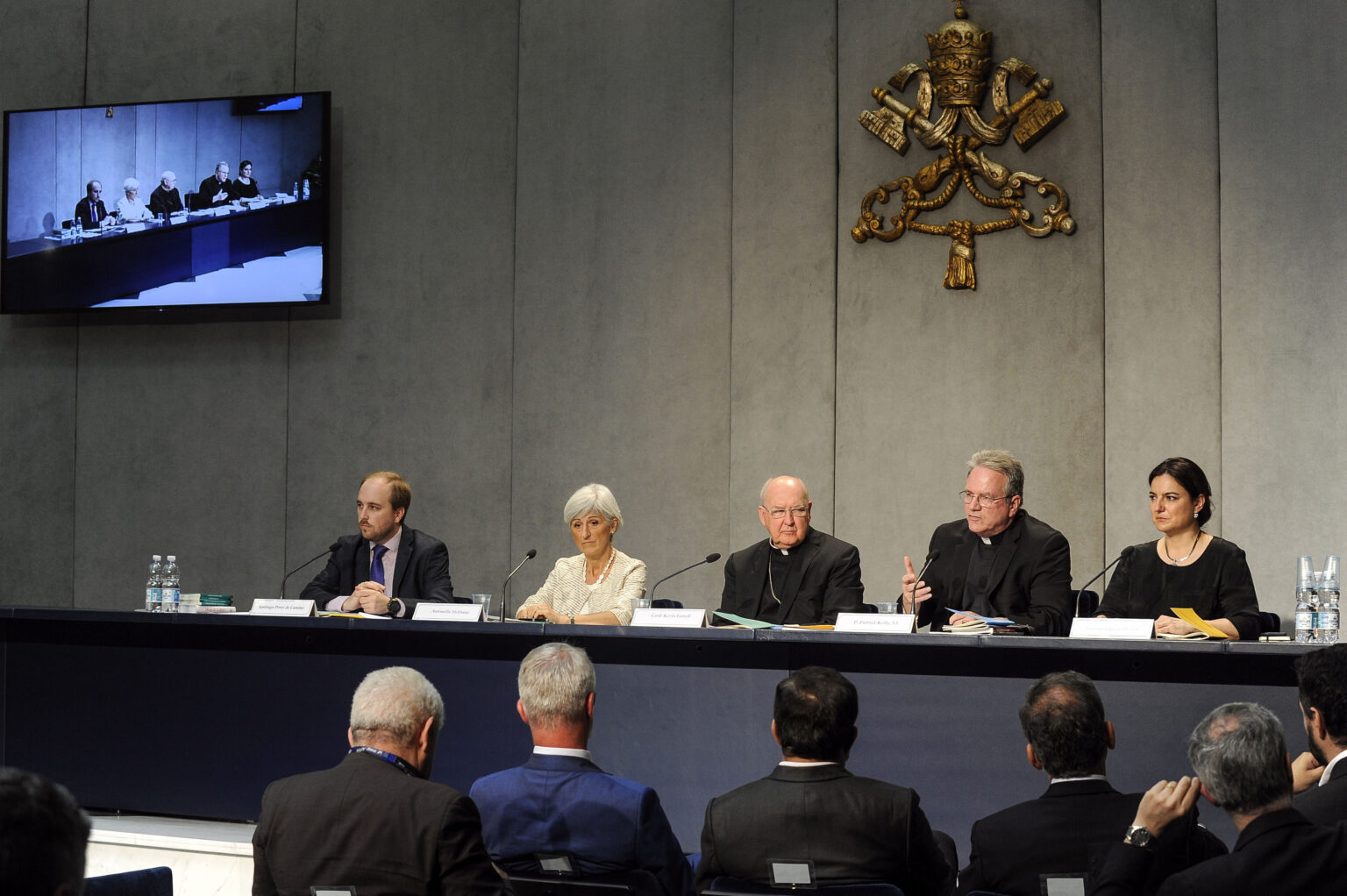
“After the room breaks up, there’s cameras everywhere and people speaking different languages,” Kelly said of that conference. “It was really a beautiful experience of the global church.”
That global perspective reflects his own teaching path. Over the years, he has taught students in Nicaragua, Seattle and Rome, which shaped how he understands sport as a shared language across cultures. He frames athletics through the teaching of Pope John Paul II, who frequently described sport as a path toward personal growth and solidarity when placed at the service of the person.
“The person doesn’t exist to serve sport, but rather, sports should serve the human person,” Kelly said, “basically, in their development as a whole person, including the spiritual element of life.”
He argues this formation often begins with the simple experience of playing on a team.
“In the United States, a lot of young people have their first experience of community outside of the home playing on a team,” Kelly said. “They learn how to develop their own skills and work together with others for a common goal. That’s important.”
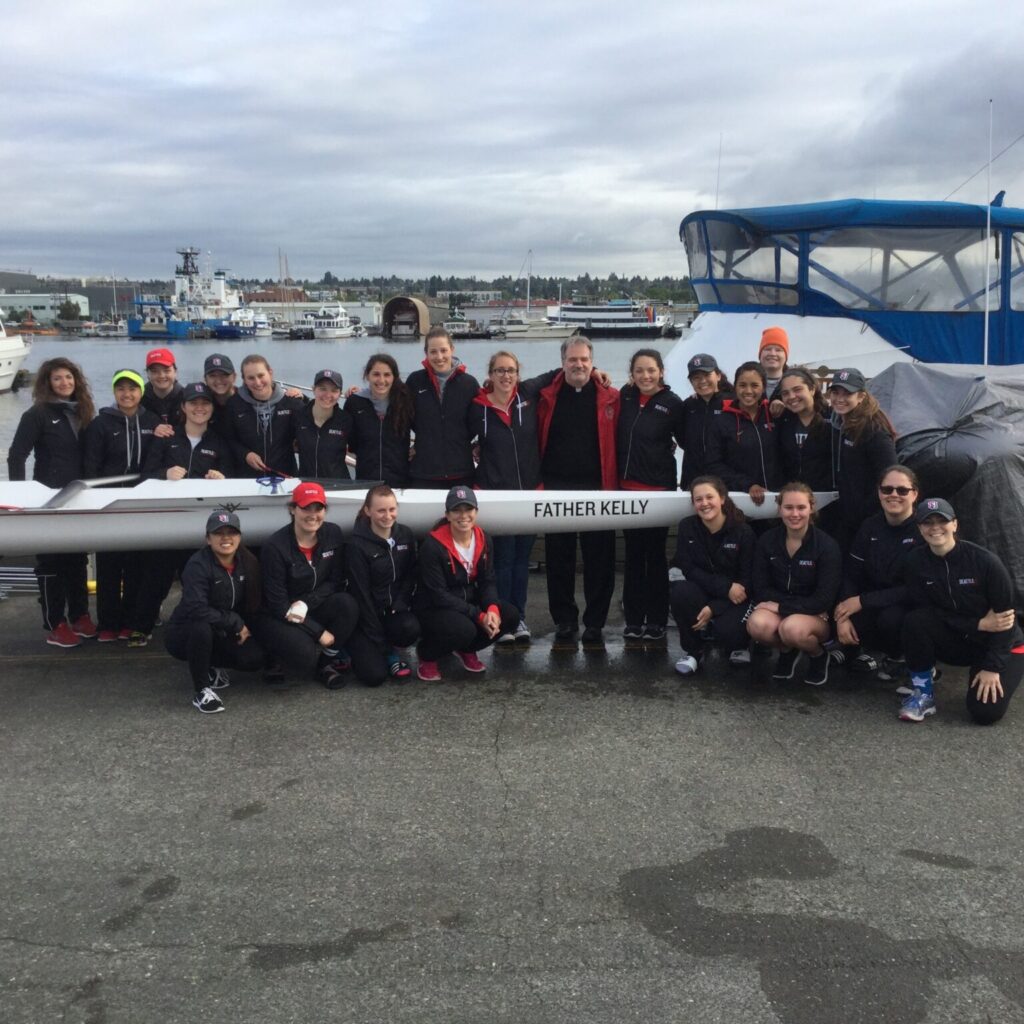
That sense of connection appears in small ways on campus, with students wearing hometown team jerseys when their team plays. It also appears in global moments like the recent 2026 Winter Olympics. These events show how sport is grounded in local culture while also drawing strangers into a shared experience.
“Sports are connected to place and community in a very tangible, concrete way,” Kelly said. “It brings people together … from different socioeconomic backgrounds, political affiliations [and] religious backgrounds.”
Kelly relates this to anthropologist Victor Turner’s idea of communitas, which is the intense sense of shared identity that can arise during collective rituals or major events. Sports create that same feeling among athletes and spectators alike.
“There’s something special about our shared humanity that we experience around a game,” Kelly said.
His 2023 book “Play, Sport, and Spirit” examines the importance of play as something inherently valuable, not merely as means to an end. Kelly is concerned that youth sports are becoming overly focused on results like scholarships or professional careers. Research shows many adolescents leave organized sports each year, often citing pressure, burnout or loss of enjoyment. Some of these trends are linked to year-round travel leagues and early specialization, which can cause overuse injuries.
Ambition has its place, Kelly said, but joy often fuels lasting excellence.
“That kind of instrumental thinking is the opposite of enjoyment, or doing something for its own sake,” he said. “Young people usually start playing a sport because they like it, because it’s fun. If things become too instrumentalized, the play element begins to be lost.”
The same principle applies to college athletes.
“People who excel in any domain, generally speaking, have a love for what they’re doing,” Kelly said. “That’s why they push the envelope. It is important for athletes at higher levels to maintain that fire and enjoyment for what they’re doing.”
That love of the game isn’t limited to the college level. It shows up anywhere people gather to play or watch. Sport endures because people orient their care, effort, and attention toward it. That human element is intrinsic to the experience, inseparable from the game itself.
“You can’t do an ‘end-run’ around humanity,” Kelly said.