CHARLOTTE THAISETTHAWATKUL/THE CREIGHTONIAN
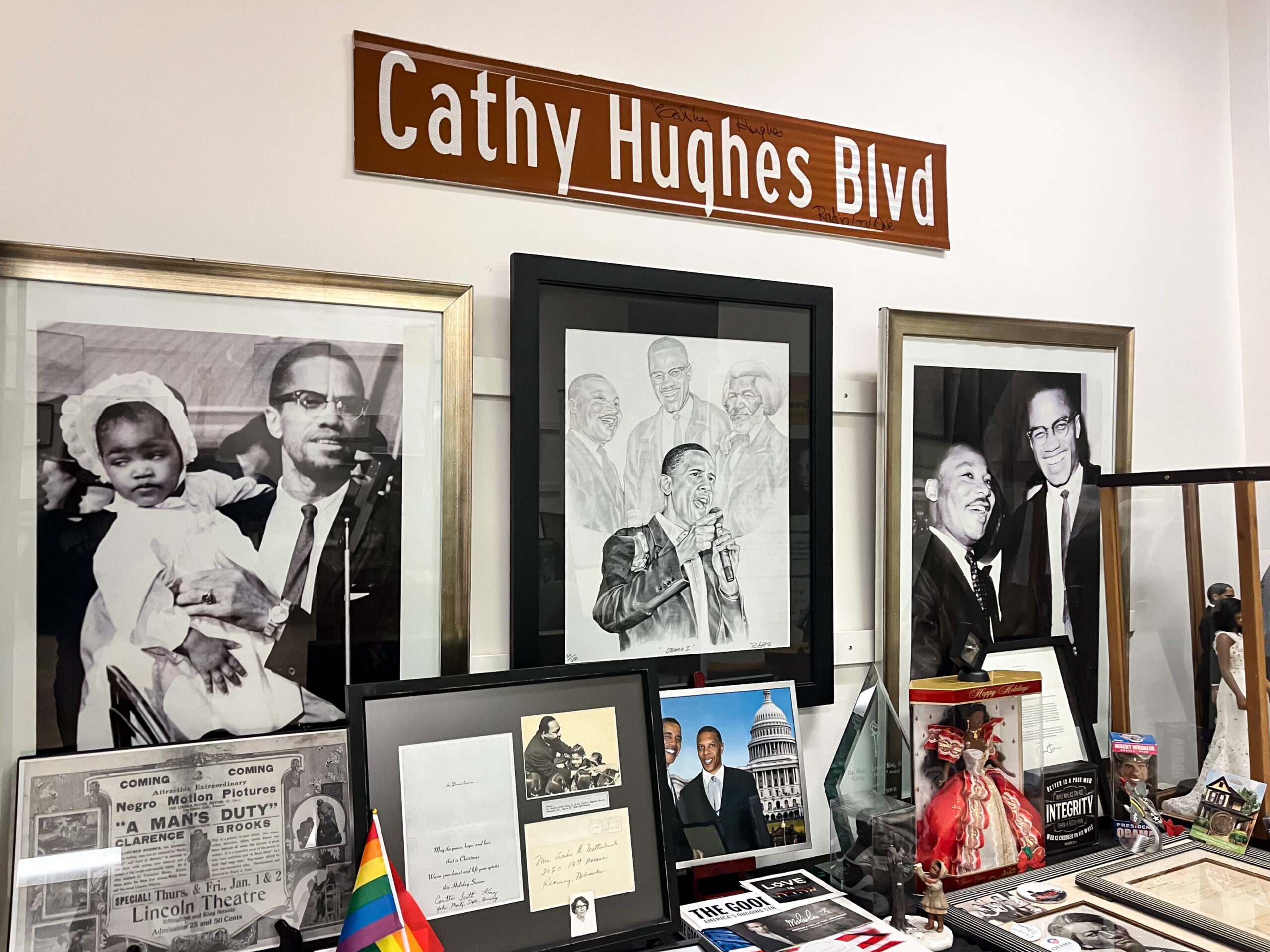
At the Great Plains Black History Museum, attendees can learn about Omaha’s rich civil rights history while getting a glimpse into thoughtful and emotion-provoking art pieces.
Though it was originally located in the Webster Telephone Exchange Building since 1976, The Great Plains Black History Museum (GPBHM) now sits on the corner of North 24th Street in the historic Jewell Building. The brick building once was home to the Dreamland Ballroom, which hosted a multitude of jazz legends throughout the mid-20th century such as Duke Ellington and Louis Armstrong. Its multiple locations in various buildings listed on the National Register of Historic Places is a testament to the museum’s deep ties not just to Omaha’s Black community, but to the overall history of this country.
The Great Plains Black History Museum boasts a modest, yet impactful collection of photographs, documents and various artifacts. In my guided tour, I was led by museum director Eric L. Ewing through the rich roots of Omaha’s Black history. From the 1891 and 1919 lynchings of George Smith and Will Brown (respectively), to the courageous sacrifice of Black Marine Charles Jackson French during the attack on Pearl Harbor, who was posthumously given the Navy and Marine Corps Medal and honored with the renaming the Benson US Post Office after him; to the founder of the GPBHM, Bertha Calloway, a Creighton University graduate and member of the school’s DePorres Club, the GPBHM highlighted important and often-forgotten Black historical figures and moments in the city’s history.
There were so many interesting bits of Omaha’s history I never knew about, like the Lincoln Motion Picture Company, the first all-black movie production studio in the country, which was created in Omaha in 1916. Unfortunately, their films have been lost to time, with only mentions in newspapers and archival material left as evidence. The previously mentioned DePorres Club was also of great interest to me, especially after learning that members of the DePorres Club were boycotting bus services before Rosa Parks.
“Her [Park’s] boycott started in ’55. Our boycott here at Omaha started in ’48 and ended in ’54 … When they were planning the boycott down south, they actually came here to get some ideas and that was one of the things that they saw we were doing here and that they recommended for folks to do,” explained Ewing.
Not to mention the various sites in Omaha mentioned in the Green Book, such as the Broadview Hotel and the Patton Hotel, which were some of the few hotels open to Black Americans, often occupied by traveling musicians. The Green Book collection at the GPBHM is an extension of the Green Book exhibit currently displaying at the Durham Museum.
“Just because we don’t talk about something, doesn’t mean it didn’t happen,” Ewing said. “Whether you learn about it today, or you learn about it tomorrow, eventually you’ll learn about it. You’ll still learn about it to help in creating that pride of being who you are,” he continued. “Everybody needs to have representation. Everybody — even if you don’t like that person, you don’t like that group of people — everybody needs to have representation.”
The GPBHM has big plans for the future, with Ewing hoping to move the museum to a larger, modernized building with meeting spaces for events and classrooms. But for the time being, the GPBHM continues to sit in its building on 24th Street, a lavish storybook of African American Omaha history.
The Great Plains Black History Museum is open from Wednesday through Saturday from 1 to 5 p.m. Guided tours are recommended and can be booked on their website.