JONAH LAGRANGE/THE CREIGHTONIAN
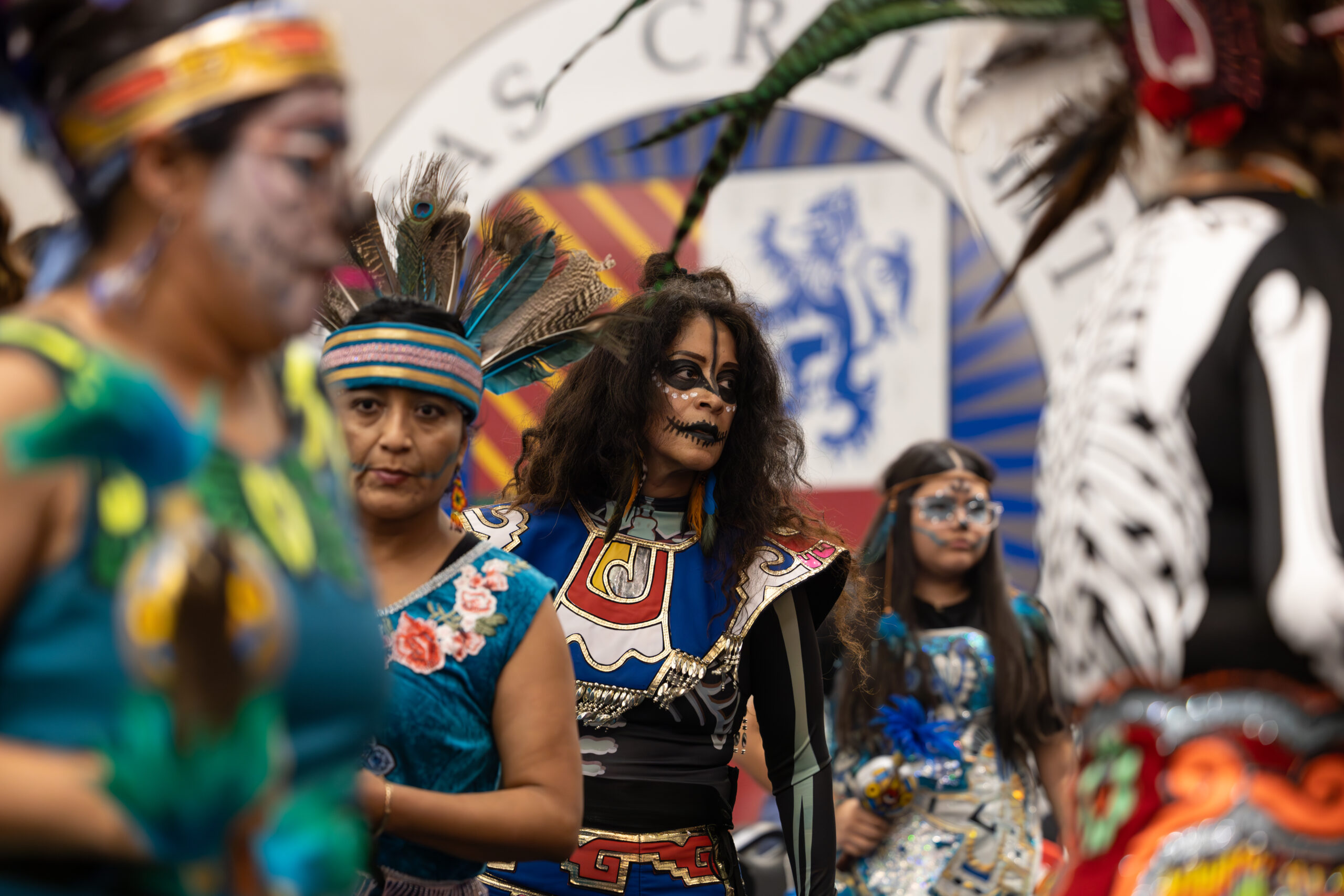
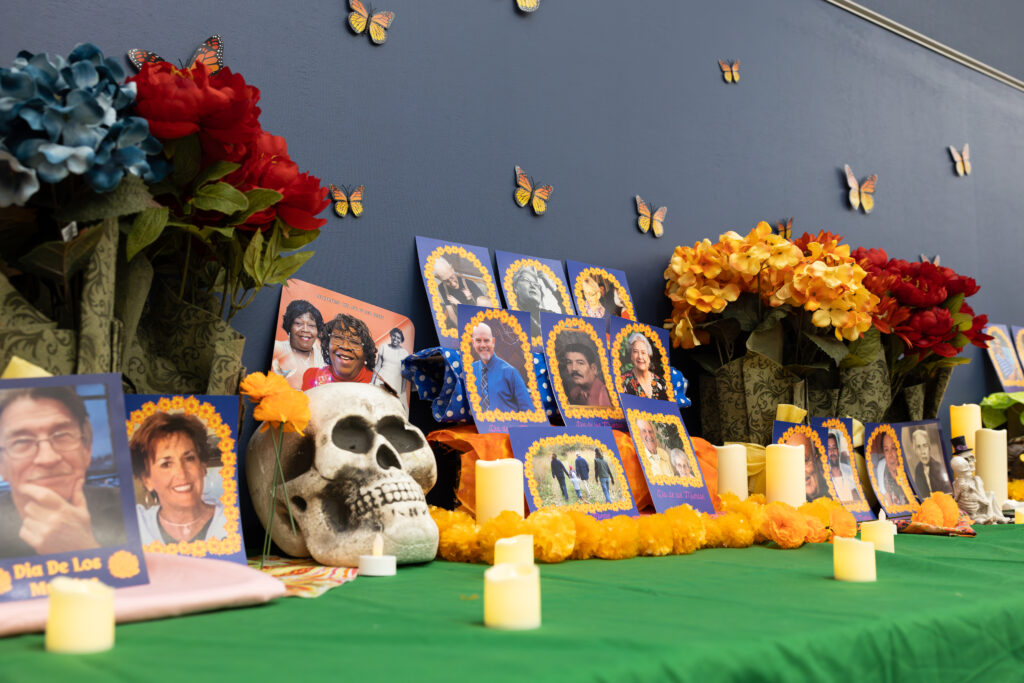
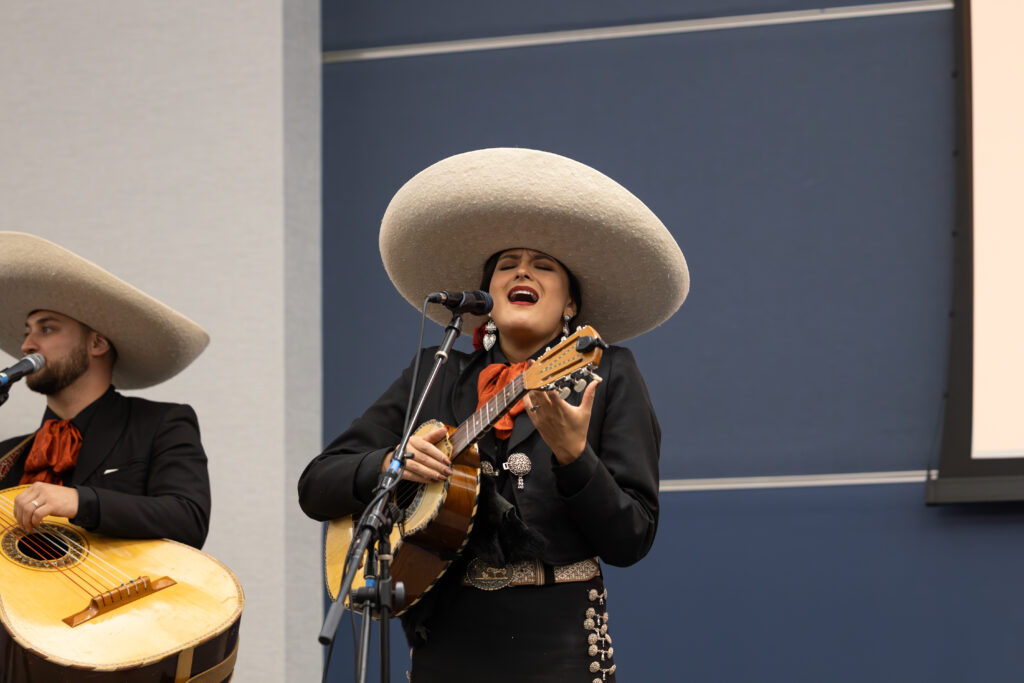
Creighton’s Día de los Muertos celebration featured live mariachi music, traditional folklórico dancing and an ofrenda honoring deceased loved ones Sunday in the Harper Ballroom.
On Monday, Nov. 2, sounds of jubilee were immediately heard upon entering the Harper Ballroom; decorated from top to bottom with colorful balloons, bright marigolds and paper banners, not a corner was left bare as Creighton faculty and students, as well as members of the Omaha community, gathered to partake in the festivities for Día de los Muertos. Though it is known as “the Day of the Dead,” this holiday is celebrated across several Hispanic and Latino cultures, serving as a way for people to honor those that have passed, while emphasizing the gift of life and joy in remembrance, instead of the grief from loss.
In Mexico and other Latin American countries, festivities often begin on October 31 and extend through November 2, in which the border between the spirit world and physical world is believed to dissolve. In this short period, souls of the dead return home to dance, feast and celebrate with their loved ones, while the living treat them as honored guests by building ofrendas, or leaving memorabilia at their gravesites. Observances originated among the Aztec people in early Mexico and were later integrated with aspects of Catholic culture following Spain’s conquest in the 16th century.
Over time, Latin countries across the globe have combined local and broader cultural aspects into their celebrations. In Guatemala, for example, individuals make barriletes grandes, or giant kites, from paper and bamboo to symbolize the connection between Heaven and Earth, permitting spirits to be guided back to their families. Other common practices include lavish parades, spending time at the grave of one’s ancestors and going to mass, which, altogether, highlight the overall attitudes of positivity for this holiday, as well as a simple shared cultural value: respect for the dead.
Such exuberance was vividly observed throughout the night as the uplifting music from the live mariachi band permeated the air, and giddy dancers clothed in traditional folklórico dresses moved rhythmically. Children could be seen posing for pictures with their friends at the photo booth station, while others sat with their families and enjoyed one another’s company. Laughter, love and fellowship seemed to be the prominent themes of the evening, instilling all with a broader sense of fulfillment and leaving no room for sorrow.
At the front of the room, however, individuals slowly passed by the large ofrenda, taking a moment of silence and paying respects to honor their deceased loved ones. This expansive altar was adorned with candles, sugar skulls, papel picado (perforated paper) and marigolds, in addition to cherished photos of the deceased. Along with these key ornamental elements, it is typical for individual, family and community components incorporated onto the altars, allowing them to be assembled in a way that reflects one’s personal heritage.
Regardless of their physical construction, Mario Alejandre, director of the Creighton Intercultural Center (CIC), explained that these ofrendas are meant to reinforce the notion that “Our loved ones are never really gone. They’re still a part of who we are … It’s just a reminder of the fact that we still continue to carry the stories of our ancestors and loved ones who have passed.”
From an outside perspective, all these concepts may seem conflicting; death typically isn’t something that is rejoiced or even discussed in conversation. In fact, those unfamiliar with the holiday frequently misinterpret the energetic celebrations for a glorification of death. But that couldn’t be further from the truth. “The irony in this day [the Day of the Dead] is that, in a very real way, people who participate acknowledge that the dead are only gone in one sense. In many ways, they’re still very much alive in a part of our memories and our presence, and who they are still shapes us,” Mario clarified.
In addition to the opportunities for commemoration, the event featured a variety of activities to gauge participation from attendees as a means of direct immersion into various aspects of Latino culture. For instance, participants could make paper marigolds, have their faces painted to resemble a joyful calaca –– or skeleton –– decorate candy skulls or enjoy authentic Mexican food like as tamales, Pan de Muerto and other dulces. These interactive features greatly contributed to the buoyant environment and stimulated interaction between all individuals.
Although the event likely held more personal significance for students and individuals of Latino and Hispanic backgrounds, it also served as a learning opportunity for those of different cultural heritages. “Seeing everybody’s different cultures, it definitely, brings everybody together,” expressed E’mia Hawthorn, a junior in the College of Arts and Sciences. “Not only are we educating each other, we’re also being inviting toward everyone’s different cultures. It [attending cultural events] makes you appreciate different things and helps you find community within yourself.”
Similar remarks were made by junior Katie Pfeiffer, who is also a student in the College of Arts and Sciences. She reported that her favorite part of the Día de los Muertos celebrations is its focus on family and togetherness, as it reminds her of her home back in California.
“Everyone comes from different cultures, right? I love that Creighton and its Jesuit values bring … diversity, because, other than that, I guarantee a lot of people would not have seen the amazing dancing and delicious food!” she exclaimed. “I think it’s important to attend different cultural events because it opens your eyes to how different, yet connected, we are. Every tradition has something centered around faith and family.”
In general, the basic acknowledgement of our distinctions is ultimately what draws us into community and allows us to connect with others, despite personal and communal diversities. This further reinforces the ideology that humans are more alike than we tend to admit, and that we share many of the same fundamental beliefs and values. Attending cultural events such as this further demonstrates these concepts and ultimately grants people the educational experiences that are necessary to develop a deeper appreciation for other traditions and heritages, in addition to their own.
“What we hope to do with this [hosting cultural events] is to create an awareness of how various people celebrate the lives of those that have passed, and how we all participate in some important ways of remembering those that … are no longer with us,” Mario remarked. “Life is sacred. It’s worth celebrating … My hope is that, as people get to experience these kinds of opportunities, they come away with the fact that, although cultures do celebrate differently, we value so much of the same things that makes us human.”
These engagements were ultimately made possible through joint efforts by the CIC, Campus Ministry and several local businesses.