SAM GIANFRANCISCO/THE CREIGHTONIAN
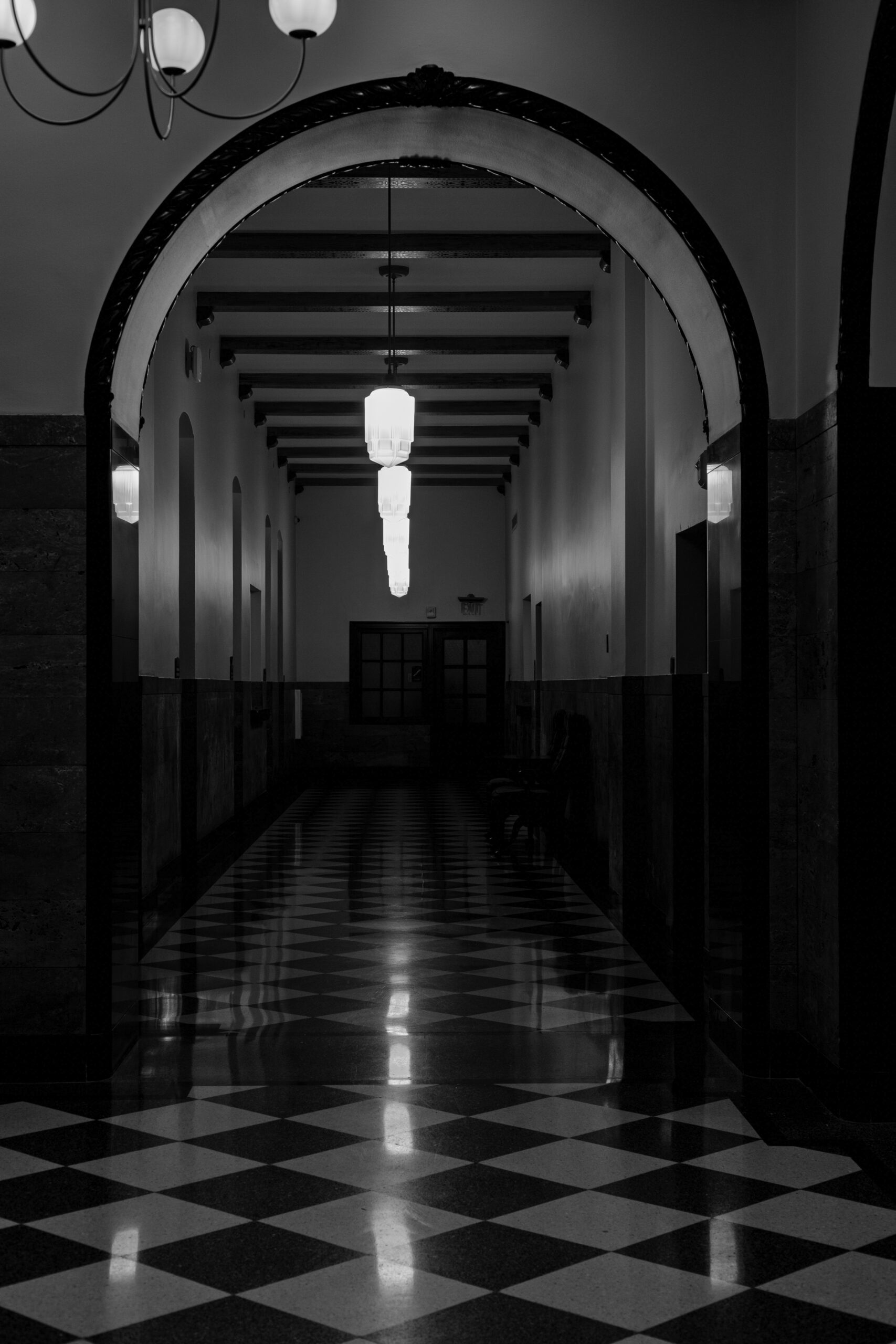
Creighton Hall, one of the university’s oldest buildings, has become a frequent site of bat sightings, with faculty reporting encounters in classrooms, hallways and the building’s attic.
At the height of the spooky season, it’s only natural that the monsters and creepy creatures of the dark have been occupying more of our minds. But unlike the fictional fiends we often see and hear in the media, one very real creature has claimed residence inside of Creighton’s oldest building.
For most, the rumor of bats in Creighton Hall is just that: a rumor. But for others who know, this legend is shockingly real. And it seems that the professors of the cultural and social studies department live this reality more than anyone else.
A truly shocking experience happened to the Director of Creighton’s Sociology program, Ryan Wishart, M.A., Ph.D., in the fall of 2020, when a student pointed out mid-lecture that a bat was crawling out of a podium. The bat then flew around the room for a while, before wedging itself between the window frames where Public Safety found it a little while later.
A similar event was also experienced by the Director of Creighton’s Justice and Peace Studies program, Daniel DiLeo, Ph.D., when he showed up to his class, which was in the same room, and found his students out in the hall, awaiting the removal of the bat. This was the first of two bat sightings DiLeo would experience since starting at Creighton in 2017. The second sighting was of a bat flying around the fourth-floor hallway, and both strange experiences left DiLeo a little spooked to say the least.
Evidently, the bats aren’t picky when it comes to the places they frequent, according to Assistant Professor Eric Meyer. He recalls seeing them everywhere from classrooms, to hallways, to even a dead bat lying on the ground in front of his office once — something trivial when compared to the bat skeleton Wishart found under a stack of old exams. In his nine years of teaching at Creighton, Meyer estimates he’s possibly witnessed more than seven bat sightings, with at least one every year apart from this semester.
“When I first started, I was scared to death of bats, but because I’ve been repeatedly exposed here, I’m not so scared anymore,” Meyer said.
An understandable statement when you’ve heard little creatures scurrying above your office and have even seen the bat colony living in the attic that used to be above the fourth floor. However, despite this newfound acclimation, a small part of Meyer still anticipates the arrival of “bat season” every fall and the sightings that come with it.
He assumes the reason people are seeing bats in the building, mostly during the fall, is the result of human disturbance and activity after a rather dead summer. That, and as bats hibernate in the winter, the warm building and dark, desolate attic space makes for a nice bat cave.
In any case, whenever a bat is spotted in the building, Public Safety is called in to take care of it. Eric Sebby, who has been with the Public Safety Department for over thirteen years, relayed that the campus experiences bats quite frequently and even has a bat protocol just for the occasion. The most frequent calls come from Creighton Hall and the Reinert Library, but sometimes bats are also found in residence halls. Officers in bat gear, which consists of gloves, a net and a bucket, go in and catch the small perpetrator before releasing it off campus if it was found in a non-residential area. The bats found in sleeping quarters are sent to the Nebraska Humane Society to be tested for rabies, and proper medical attention follows if needed.
Unfortunately for us, bats can cause dangerous diseases like rabies and histoplasmosis — a fungal lung disease caused by bat guano — according to the Nebraska Extension publication, “Bats in and Around Structures,” led by Dennis M. Ferraro. However, as dangerous as these diseases are, they tend to be rare, as is the case of the bat strain of rabies, and easily avoidable. Regarding Creighton Hall, air tests during recent construction have revealed that there are no health concerns, according to Meyer.
Nevertheless, another much-more-horrible affliction lurks among the bats. A fungal disease called white-nose syndrome has worked its way across the country infecting hibernating bat colonies and leaving millions of dead bats in its wake since its discovery in 2006, according to the National Park Service. The disease only thrives in cold temperatures and therefore isn’t transferable to humans due to our higher body heat. However, even though we are immune to white-nose syndrome itself, we are still impacted in a different way.
Bats are a vital part of our ecosystem, especially here in Nebraska. The bat species native to the state are all insectivores, meaning they eat mostly insects. Bats are able to eat enough bugs to actually have an impact on our agriculture and save farmers millions on insecticides. On a larger scale, the U.S. Fish & Wildlife Service estimates that in the corn industry alone, bats save more than $1 billion per year in crop damage and pesticide costs. In other areas, bats are essential pollinators and seed-spreaders and create more diverse and healthy ecosystems through their actions.
Without bats, we’d lose a key species in our local food chains, have a higher agricultural production cost each year and probably be bombarded by more mosquitos in the summer. This is why it’s so important to release instead of kill and be aware of the disease decimating our bat populations so we can start to do something about it.
As scary as bats are made out to be, they really want nothing to do with us. So why not let our little vampires continue hunting the real blood-suckers, giving more to us than we’ve often given them credit for.