PHOTO COURTESY OF ILAC
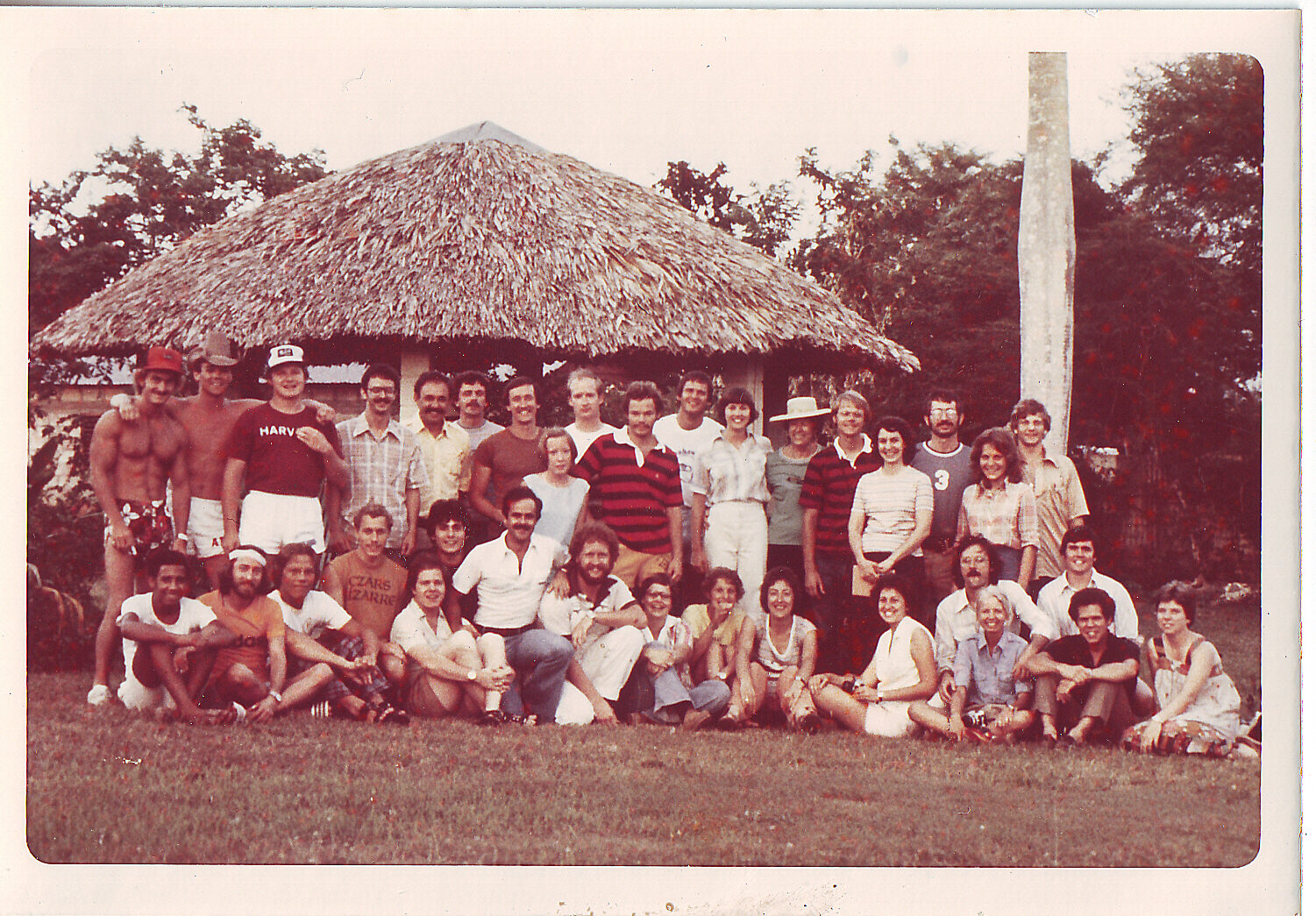
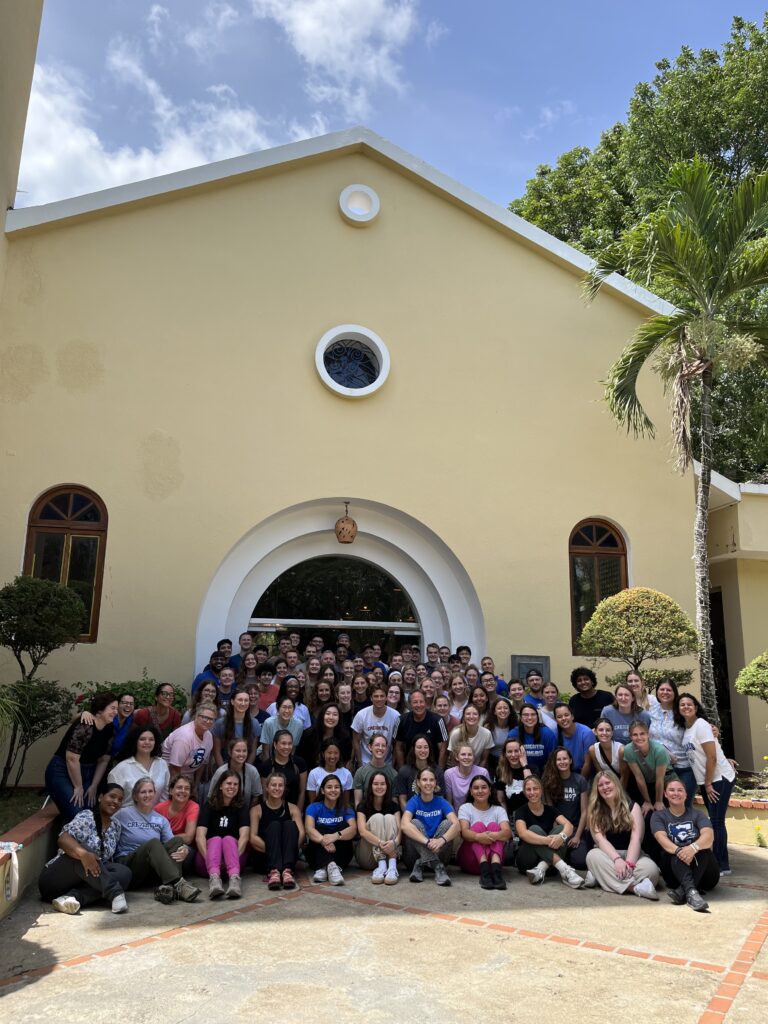
Creighton University officially announced over 50 years of service for their Institute for Latin American Concern (ILAC), marking a new milestone in the program’s history. Created through a long term partnership with the Centro de Educación para la Salud Integral (CESI), Creighton has supported over 6,000 graduate and undergraduate students, from the Phoenix and Omaha campus, to participate in over 200 service projects across the Dominican Republic (DR). Service projects include healthcare services or the construction of a community aqueduct or greenhouse.
In 2026, Creighton University’s Institute for Latin American Concern (ILAC) officially reached its milestone 50-year birthday, which, according to the organization, has allowed over 6,000 students to participate in over 200 service projects across the Dominican Republic (DR).
“I think of it as a pilgrimage and, if you know anything about a pilgrimage, it’s a journey to some place that you go and you learn lessons on the way so that when you go back to where you started you can live differently … if people view it like that, I think it can really thicken the mission in ways that are really good,” Director of the Creighton Christian Spirituality Program and Professor of Theology, Thomas Kelly, MA, PhD, said.
On Thursday, Oct. 22, Kelly spoke upon the mission of ILAC at the Kripke Center Symposium on Religion and Community, stating that the program serves “to cultivate growing human integration in harmony with faith and development of society.” The program itself stems from the long-term partnership with Centro de Educación para la Salud Integral (CESI), which was founded in 1972. Through this partnership, Creighton graduate and undergraduate students, from both the Phoenix and Omaha campus, have studied and provided service to various communities in the Dominican Republic.
“We have lots of program opportunities for students from undergraduate full-semester programs to summer immersion to fall break programs. We also work with a lot of professional school students. Students in the med school, dental school, pharmacy, school of law, OT [occupational therapy], PT [physical therapy] and PA (physician assistant) all have opportunities to go to ILAC,” Director of the Study Abroad office and Omaha-based director of ILAC Programs, Jill Muegge, said. “We also work with a lot of high schools and medical teams as well. So, ILAC is a place … really engrained in the Creighton community … and really whatever you’re interested in studying or interested in learning about, there’s an opportunity for you to experience that at ILAC.”
These programs are separated into two categories. One category centralizes itself around all graduate school opportunities in which the students utilize their specialized skills and knowledge to further expand access to healthcare to those in need within the region.
As for the undergraduate opportunities, these programs belong to ILAC’s Encuentro Dominicano program, in which students can complete an entire semester in a premier academic and service-learning program or participate in specialized opportunities including their Water Quality Program, Education Exploration Program, Verano Domincano, Trio SSS program and the Summer Health Program for 3-3.5 weeks. In terms of the structure for each program, both combine student learning and training on the ILAC campus, which is owned by CESI, and community work in rural areas.
“Whatever program you’re doing, part of your program is on the ILAC campus … and when students are there, they’re living in … community with maybe four or six other Creighton students on the same program. Every program also has some sort of immersion built into it, which is when students go into a rural community. We call them ‘campos’ in the DR. That’s the Dominican slang term for a rural village. So, every program has some sort of immersion aspect to it,” Muegge said.
College of Arts and Sciences junior, Joshua Wember, has participated with ILAC twice throughout his undergraduate education. His introduction to the program was during the 2025 Summer Health Program, where he served as a medical and dental assistant in El Zumbador, a rural agricultural community in the region. Wember continued his pursuits with ILAC in the Encuentro Dominicano semester abroad program the following August through December. There he was able to continue his undergraduate studies and learn Spanish on the Santiago campus. He simultaneously shadowed health professionals while also being able to further immerse himself in service and exploration of the country.
“It was so unique. I’ve never had an immersive learning experience like that before,” Wember said. “Taking what our lectures would teach in class about sustainability in the DR and then taking Spanish down there and being able to use the stuff that I learned from the classroom and apply it to the community was incredible. I know they teach us so much in school, but to have firsthand access to that knowledge and have it be really useful on the spot was a lot of fun.”
According to Kelly, Muegge and Wember, a large part of the program’s immersion comes from the portion of the ILAC mission where students and faculty stay with hosts families when dispatched for service in the rural areas.
“Before the students even came down, I would meet with the community leaders, and I would ask them if they wanted a group to come visit. And I basically said, ‘We can offer you a project that we’ll do. We can help with an aqueduct, or we can help build a house … but what we need from you is your hospitality. We need you to help teach our students what your life is like,’” Kelly said. “After the interview with the community, they would say, ‘yes.’ No one’s ever said, ‘no’ … We had two students per home … and then they would live with their Dominican families for 10 days while they did this project.”
According to Muegge, host families selected to house the ILAC students accommodated them to the best of their ability, oftentimes placing the comfortability of their guests above their own.
“[Sometimes] they’re very literally giving up their beds and their spaces for students. And while students are staying with the host families, they’re doing some sort of project alongside the community. That might look like helping build an aqueduct or a greenhouse. It might look like running a medical clinic, [or] something like that, depending on what program they’re in. But that is oftentimes the most impactful experience for students. And it’s very eye-opening,” Muegge said.
During these service trips, students also did not have access to certain amenities that they may have been used to in the states, such as access to cellular service. Language barriers also served as a challenge to some, but according to Muegge, the language barrier did not prevent participants from forming an even deeper connection to the Dominican Republic through their host families and those that they have helped along the way.
“These families do not speak English. Most of these communities oftentimes don’t have consistent electricity, running water, cell service or data. So, students are really off the grid when they’re there. You spend a lot of time in the evenings with your host family, like maybe going through pictures on your phone and showing them pictures of your family, learning to play dominoes, learning to play cards or dance bachata. There’s a lot of really immersive experiences. And sometimes it’s the first time that students have ever been off the grid.”
For Wember, he spent much of his time playing dominoes with his host family.
“I never played until I went down there, and I think I put in like a hundred hours at least on that game. They love dominoes … they would know my entire hand before I even looked at the cards,” Wember said.
Wember did find himself struggling with the lack of cellular data, especially since his mother’s birthday was during his service trip, and he had no way to contact her. Yet, it was through the generosity of one of the community members that he was able to overcome that struggle.
“I think the hardest [part] for me was it was my mom’s birthday while I was doing the summer health program, and [I was not] able to talk to her that much. But luckily one of the people living in the Campo let me use their phone to call her. So, it was really a sweet moment between us and then also just talking to my mom for the first time in like two weeks, which was really cool,” Wember said.
This experience has pushed Wember to pursue service back in the United States as he took great inspiration from the volunteers, doctors and dentists that have been with the ILAC program for over 50 years. His time in the program also helped him recognize how much some take for granted the available resources they have compared to those who are born into communities of poverty.
“[In] my experience shadowing and looking at the pre-health profession, you see a lot of patients that kind of take it for granted here [in the U.S.]. And they don’t really know that [access to healthcare isn’t considered] a basic human right in most countries,” Wember said. “There was this one guy, and we had to pull 11 of his teeth, and after it was done, he was smiling and thanking us profusely and saying, ‘God bless you.’ And I’d never seen that kind of love from anyone, much less someone who we just had to pull the majority of his teeth out.”
In addition, as students reflect on their experiences during the program when they return to campus, Muegge and Kelly found that many students returned with a greater understanding of who they wanted to become in their careers and their communities.
“I think [they] discern what their passions are. We get that a lot with students [who] come back from the semester abroad program really on fire about their major and what they’ve always wanted to do or thinking of something completely new that they never experienced before. I think having that opportunity to disconnect and listen to yourself and [discover] what brings you joy and what lights your fire –– you have the opportunity to [do] that when you don’t have so many distractions waiting for you on that phone,” Muegge said.
Overall, the ILAC program, and time spent in the Dominican Republic, is the time for students, faculty and volunteers alike to understand what it truly means to give back to a community that doesn’t have access to “First World-level health care.” However, he also stated that the experiences one accumulates throughout the program extend far beyond the duration of the program and attribute to students’ engagement with the university’s Jesuit values.
“The experience only ends when you’ve decided it ends,” Kelly said. “You can continue to reflect on it. But I also think that our [Creighton] values are not ideas. They’re actual actions. And if you don’t engage in the actions, you don’t understand them.”